
Radiologic Technology







Frequently Asked Questions
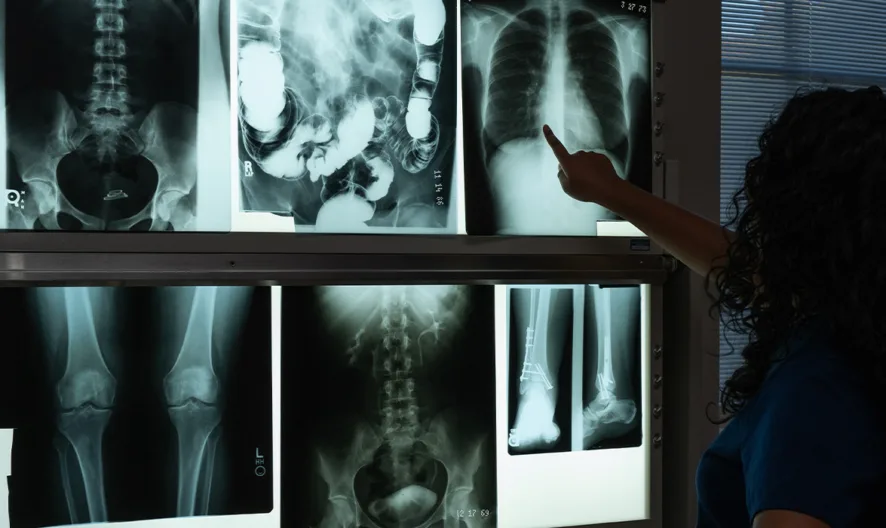
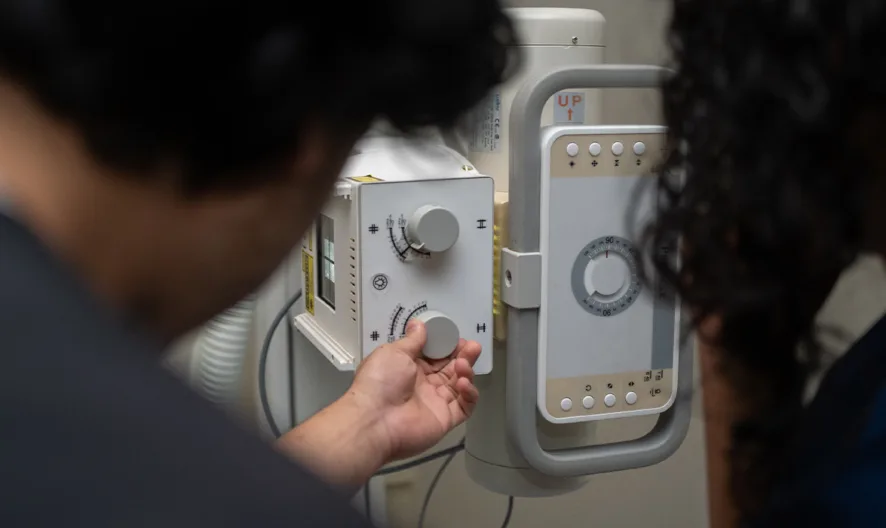
According to the American Society of Radiologic Technologist, Radiologic technologists are those who perform imaging examinations and are responsible for accurately positioning patients and ensuring that a quality diagnostic image is produced. They work closely with radiologists, the physicians who interpret medical images to either diagnose or rule out disease or injury. For the images to be interpreted correctly by the radiologist, the imaging examination must be performed properly by a radiologic technologist.
Radiologic technologists often specialize in particular diagnostic imaging areas. Some of these areas are: Bone Densitometry, Cardiovascular Interventional Technologist, Computer Tomography Technologist, Magnetic Resonance Imaging Technologist, Mammographers, Nuclear Medicine Technologist, Quality Management Technologist, Radiographers, and Sonographers. Each imaging modality requires a specialized skill set and educational and/or hands-on training. The RAD program at Jeff State educates students in becoming certified Radiologic Technologists.
The Radiologic Technology program application is due annually on May 20. Applications are available online through the Jefferson State Community College website each year between March 1 and May 20.
To be eligible to apply, you must first be admitted to Jefferson State Community College and have an active Jefferson State email account. Before submitting your program application, ensure that all required admission documents have been submitted, including official transcripts and ACT scores.
Applicants must have a minimum ACT composite score of 18 and a minimum science subscore of 18. ACT scores must be no more than five years old as of the application deadline.
It is strongly recommended that all official transcripts and ACT scores be submitted at least four weeks prior to the May 20 deadline to ensure timely processing.
Once the application deadline has passed, program advisors will review and rank all program applications. Once the ranking is complete, the highest 35-40 point ranking individuals will be emailed, using a Jefferson State email address, an admission letter and packet with specific instructions. Some information includes how to secure the applicant’s seat in the program by completing a background check and attending a mandatory orientation session as scheduled.
All program applicants not accepted will receive an email to their Jefferson State email address approximately 2 weeks after the RAD TECH application deadline has passed.
If you were not competitive enough to be accepted into the program, you may schedule an appointment with an Academic Advisor to review your application.
The Ranking sheet used for admission to the Radiologic Technology program is divided into three sections: ACT Score, Academic Course Grades, and General Education Courses. To strengthen your application, it is important to understand how each section contributes to your overall score. Earning the maximum possible points in each section increases your competitiveness in the applicant pool.
ACT Score Section
This section allows for a maximum of 72 points. The minimum required ACT composite and science subscore is 18. While a score of 18 in both areas makes a candidate eligible for admission, a higher ACT score will significantly improve your ranking. Candidates who wish to be more competitive are encouraged to consider retaking the ACT to improve their scores.
Academic Course Grades
Points in this section are awarded based on grades earned in key courses:
- A = 30 points
- B = 20 points
- C = 10 points
Candidates must earn a grade of C or higher in the following courses to meet eligibility:
- MTH 100 or higher
- ENG 101, ENG 102
- BIO 103, BIO 201, or BIO 202
To become a stronger applicant, applicants are encouraged to retake any of these courses in which they earned a lower grade, making the application more competitive.
General Education Courses
A maximum of 7 points can be earned in this section by completing the following general education courses: ENG 101, MTH 100 or higher, PSY 200, BIO 201, BIO 202, A humanities elective, One of the following: ENG 102, SPH 106, or SPH 107
To be more competitive in this area, candidates should complete as many of these courses as possible before the application deadline.
The general education courses required for admission to the Radiologic Technology program include: ENG 101, SPH 106, SPH 107, or ENG 102; MTH 100; PSY 200; BIO 201; BIO 202; and a Humanities Elective. While eligibility for MTH 100 and ENG 101 by the fall admission period is the minimum requirement, applicants become more competitive in the selection process by completing more of the required general education courses prior to applying.
Each year, the RAD program accepts 35-40 students based on clinical availability.
There is no minimum point requirement for admission. During each admission cycle, all applications are reviewed and ranked from highest to lowest based on total points earned. The top 35 to 40 applicants who meet all admission requirements are selected for acceptance into the program.
Students are not restricted from working a full-time job; however, to be successful, students need to remember that the RAD program requires students to attend classes Monday through Friday in varying semesters or clinicals from 7 AM — 3 PM.
The Rad Tech program costs breakdown can be found here.
The RAD program begins each Fall semester and last for 5 consecutive semesters. This is approximately 21 months.
The clinical sites may be found here.
The RAD program is a full time academic program with a minimum credit hour per semester ranging from 10-16 hours.
Jefferson State Community College’s Radiologic Technology Program is accredited by the Joint Commission on Education in Radiologic Technology.
The RAD program at JSCC has an excellent pass rate for the ARRT certification exam. All certification pass rates, program completion rates and job placement rates can be found here.
Yes. The top ranked individuals who are admitted to the program will be subject to a background check in order to secure an admission seat. Information will be sent to the Jefferson state email to top ranked applicants with their acceptance letter and information.
No we currently do not offer credentialing in CT, Sonography, or MRI.
Attending the Radiography Admission Orientation Session is MANDATORY. By not attending, the applicant forfeits their admission seat. If there are extenuating circumstances in which an applicant cannot attend the Mandatory Admission Orientation Session, they should contact the Program Coordinator in the Judy Merritt Health Science Building suite 323 or by phone at 205 983-5218 or by email at [email protected].
Yes, only the ACT will be considered for RAD program admission.
The ACT must be completed with the appropriate score within 5 years of the application deadline and be on file with the college by the application deadline
Superscores for the ACT are not used for program admission at this time.
The ACT residual is the ACT test that is given at most Alabama Community College System schools and that is valid only at Alabama Community College Schools.
ACT residual Scores are transferable to any Alabama Community College school but will not be accepted by any 4-year University systems.
ACT residual at JSCC can be taken every 60 days. There is no wait period between the national ACT and the residual.
Cost for the ACT residual exam is estimated. Please check with the testing center for the most up to date cost.
$63.50
ACT residual exams are by appointment only. You may schedule an appointment by using the link above. You will need to have a Jeffersonstate email address, ACCS student ID number, and phone number to schedule the exam.
Scores can be received anywhere from 2-3 weeks after testing. Scores are available on the Student Hub from the Jefferson State website.
Yes, general education courses may be taken alongside the Radiologic Technology (RAD Tech) courses. However, completing all required general education courses prior to applying to the program can make a candidate more competitive during the admissions process. Additionally, because the RAD Tech course sequence is rigorous and demanding, it is strongly recommended that students complete as many general education courses as possible before beginning the program to support academic success.
FAQs updated for 2026.